An industrial application suite centred on the installation of vibration sensors and the analysis of the data they generate, built to optimise workflows for industrial processes.
My role
Lead UX & Service Designer
My responsibilities
Research, Product strategy, Workshop preparation & facilitation, Information Architecture, Interaction design, Stakeholder management
Team
Product designer
Project manager
Product owner
3x front-end developers
2x back-end engineers
Duration
14 months
Sector
Manufacturing
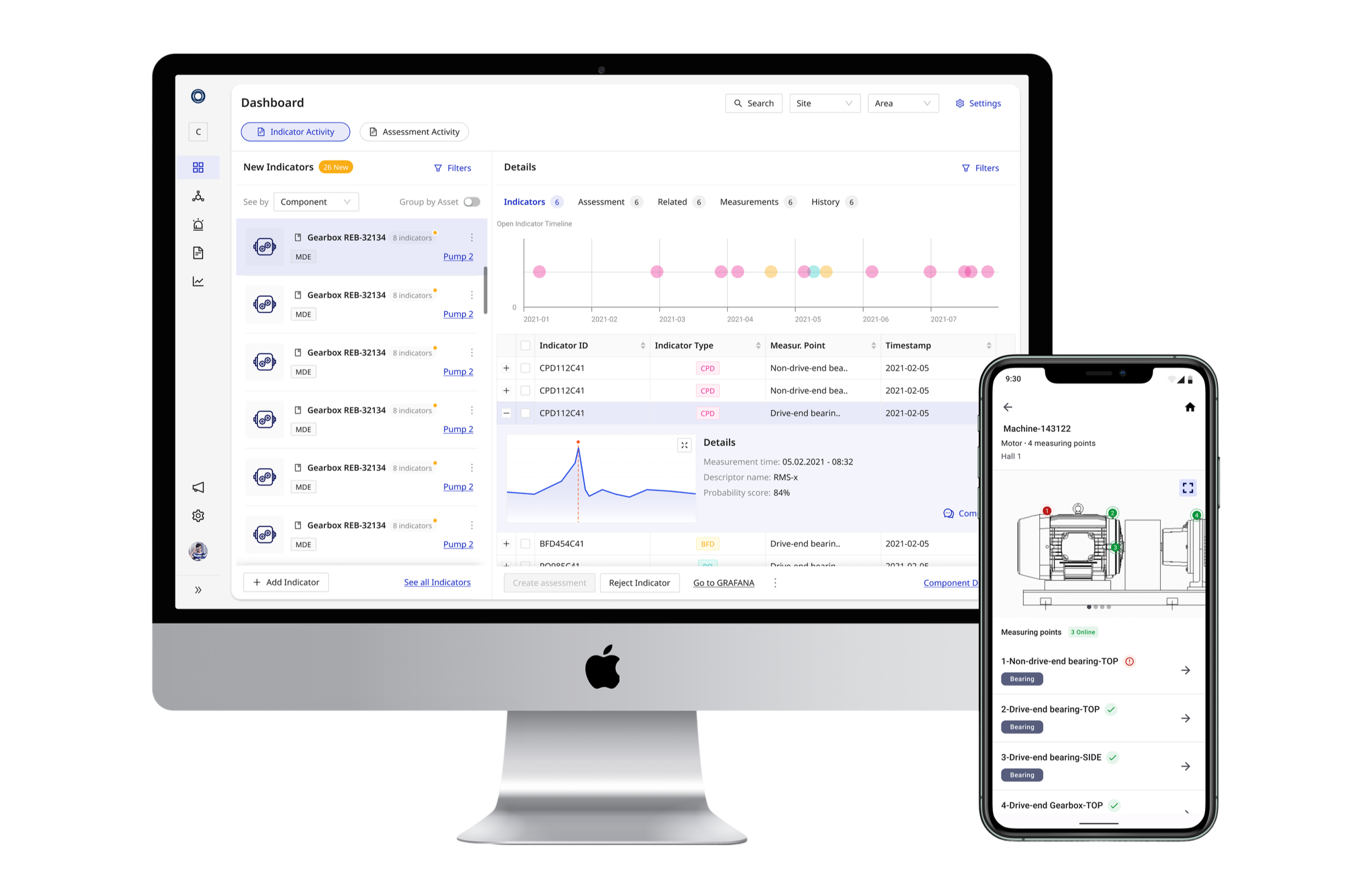
THE CHALLENGE
Field technicians installing wireless vibration sensors in safety-critical industrial environments were working with printed manuals, scattered paperwork, and no digital support. Errors were common, communication between teams was fragmented, and the installation process was far slower and riskier than it needed to be. The client came to us for a mobile app. What the problem actually required was bigger than that.
DISCOVER & DEFINE
We spent one month in intensive discovery: desk research across the condition monitoring landscape, expert interviews with engineers and technicians, and a thorough mapping of the existing workflow. Making the process visual revealed how deeply fragmented the experience was and how interconnected the problems were across the entire workflow, not just at the installation step.
That journey map changed everything. Making the process visual revealed how deeply connected the problems were from project planning, to on-site installation, to ongoing data analysis. What had started as a brief for a single mobile app was clearly a systemic challenge.
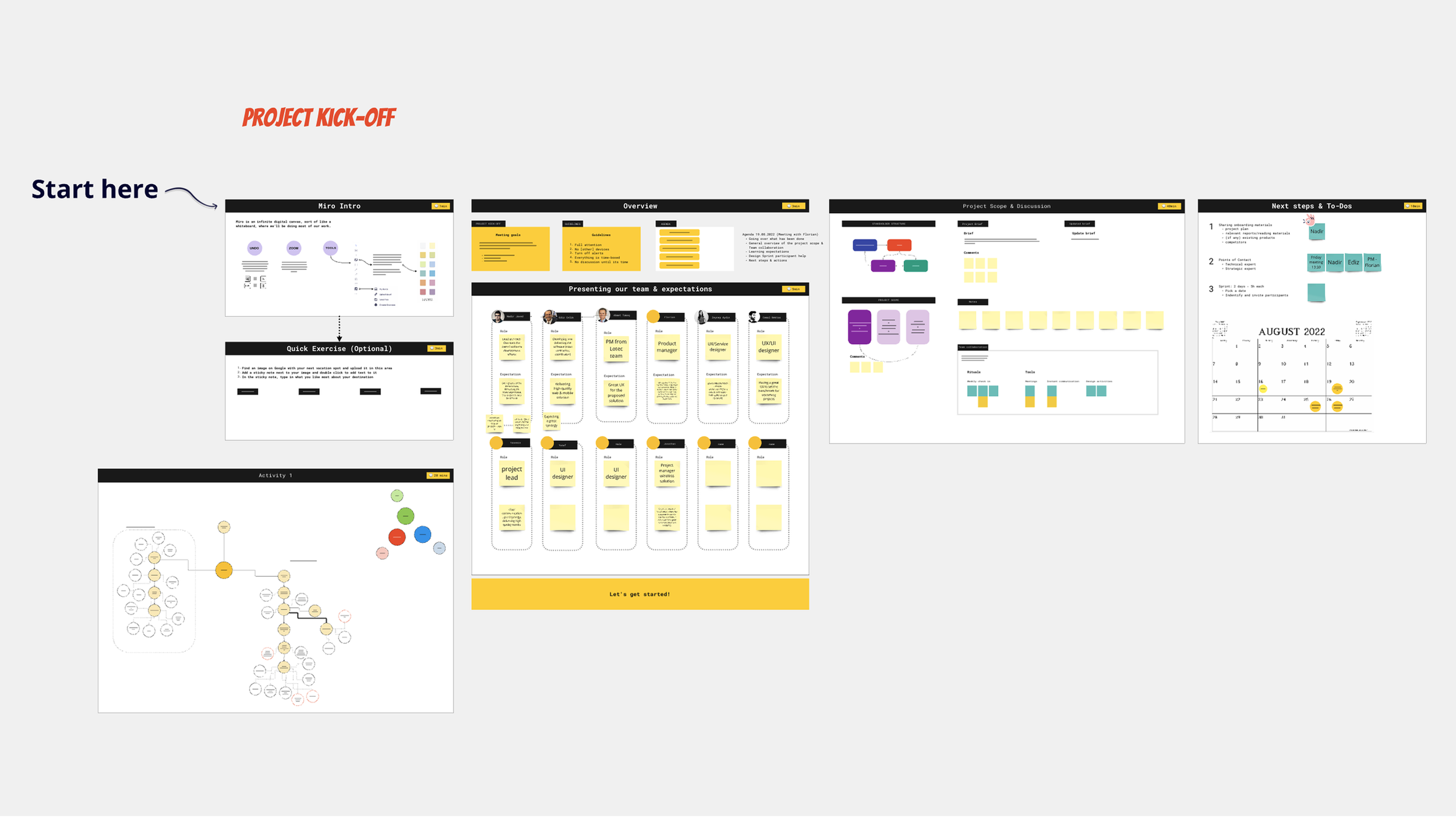
Project kick off
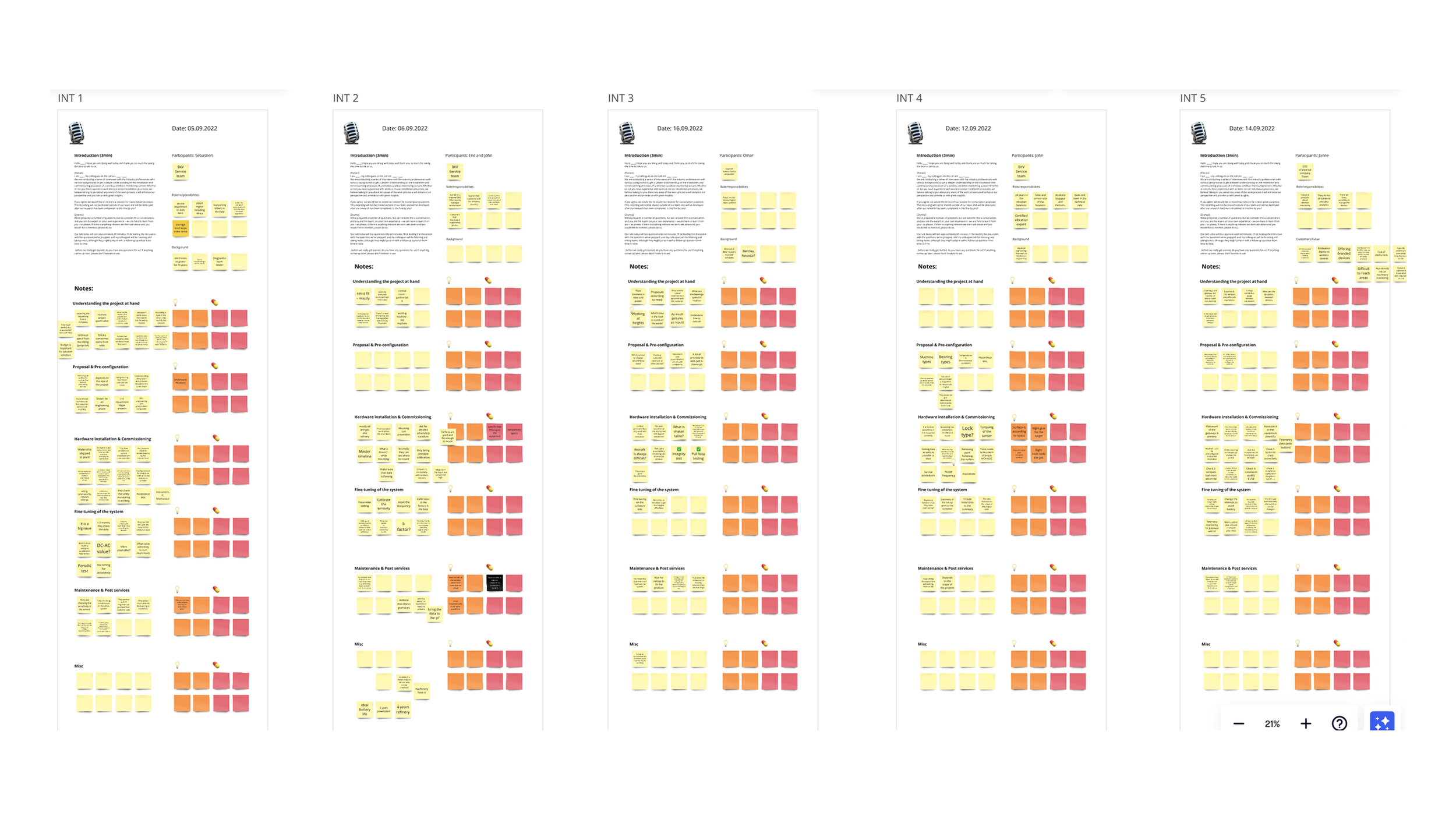
Interviews with Subject Matter Experts
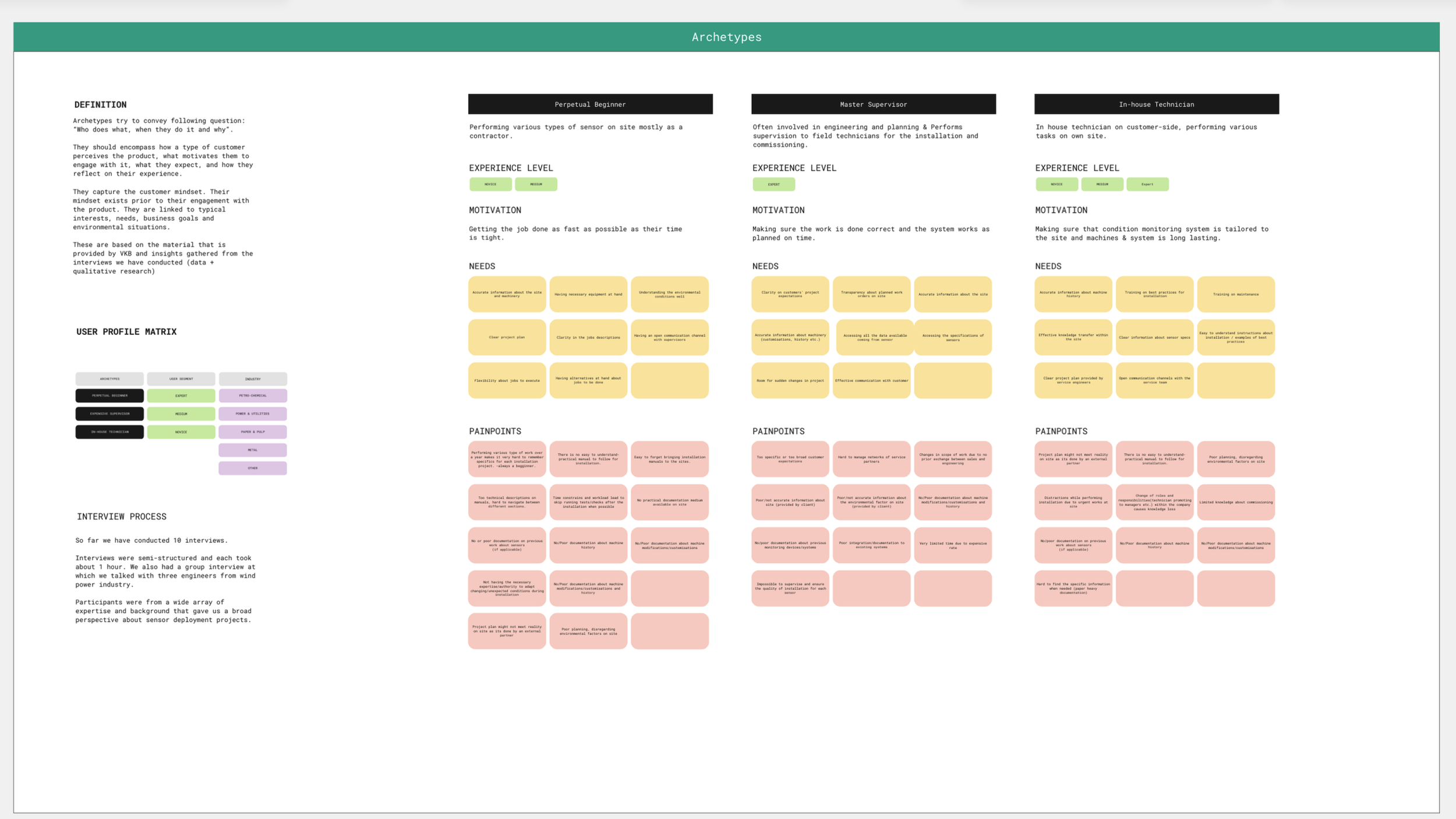
User archetypes
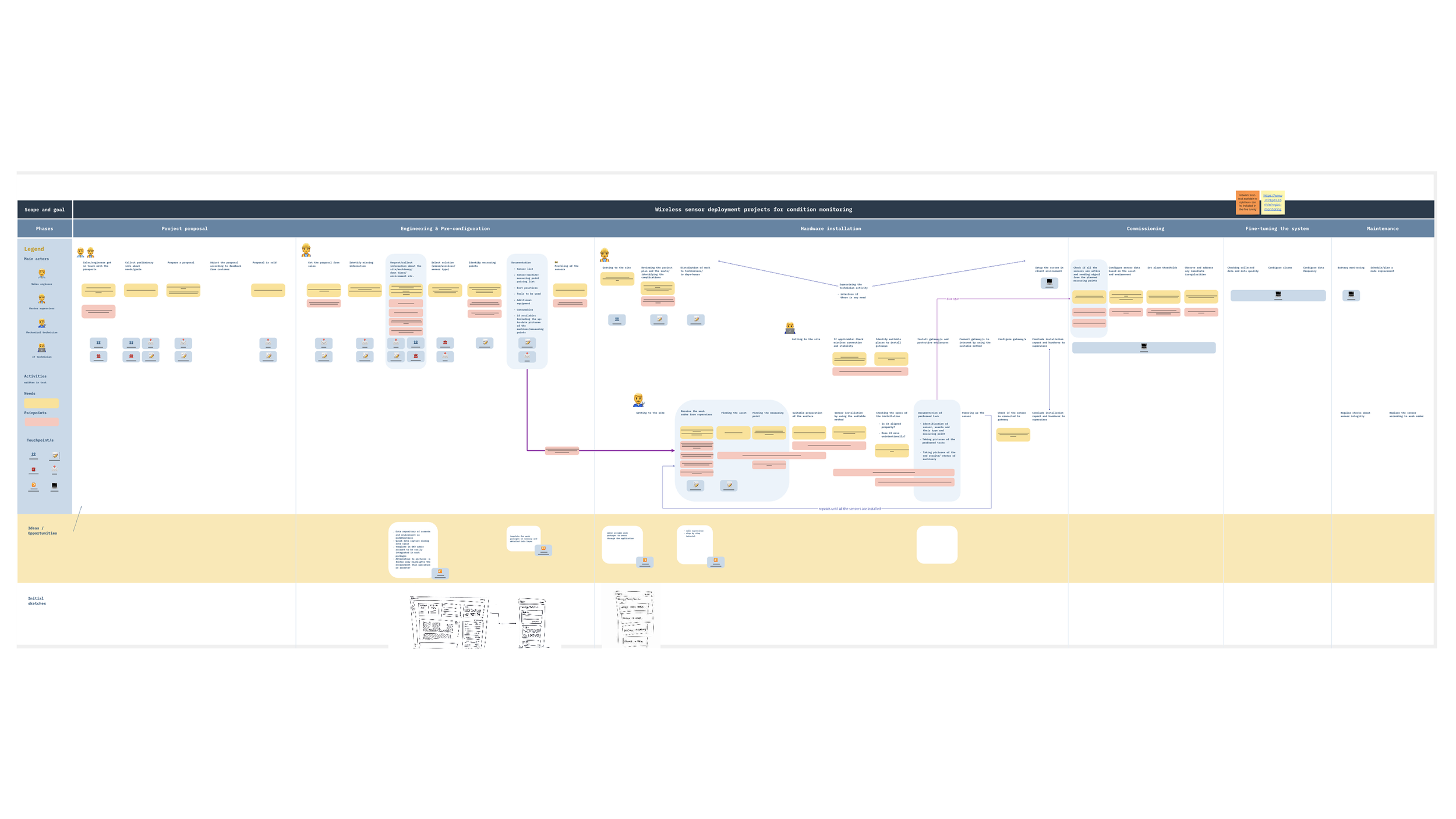
As-is journey map
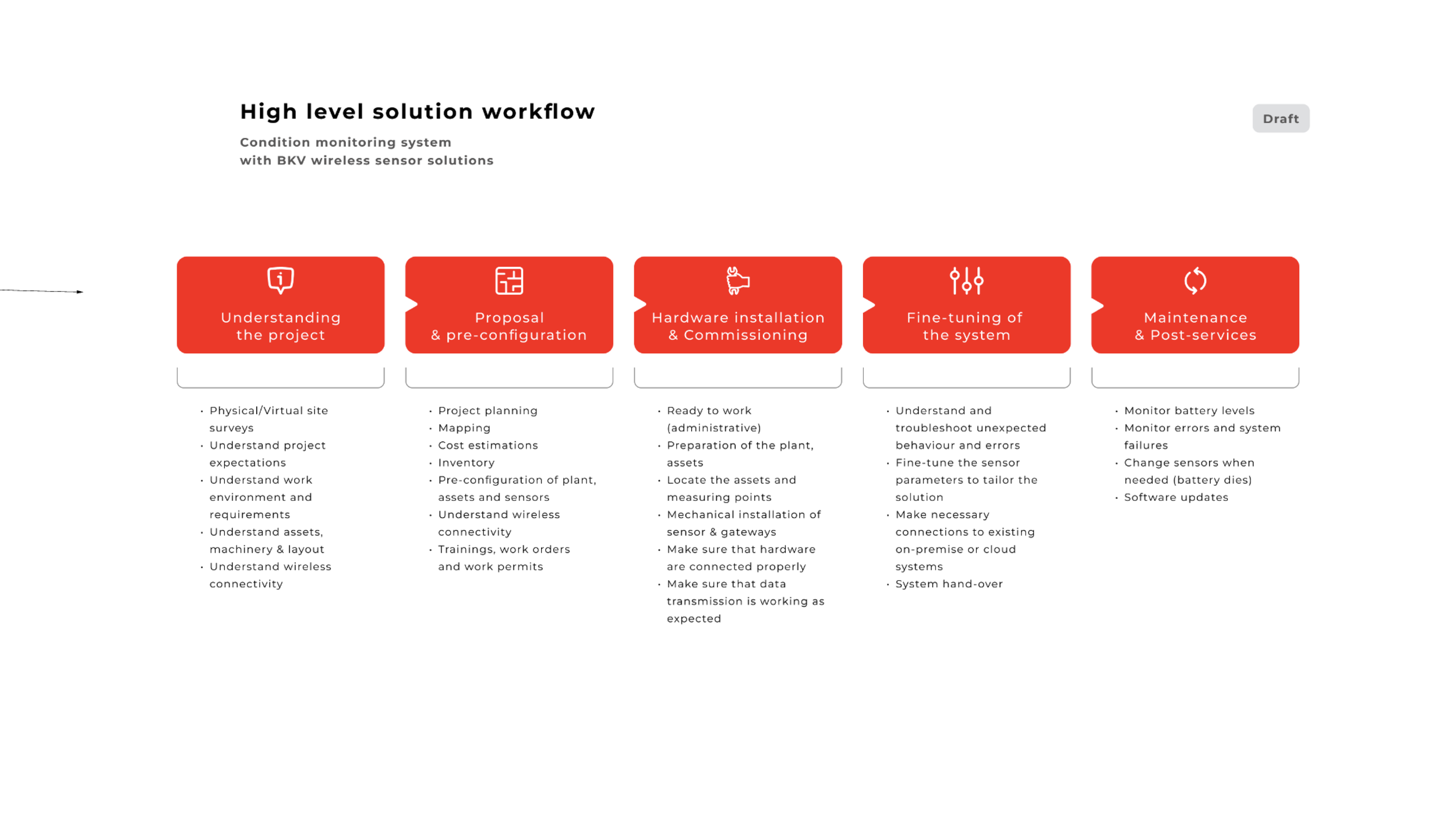
Overarching process map
IDEATE & VALIDATE
The journey map made the systemic picture impossible to ignore. My co-designer and I brought the full picture to the client and made the case for expanding the scope: rather than a single installation app, the product needed to address the entire condition monitoring journey. The client agreed.
We defined a three-product suite: Ignite for project planning, Deploy for on-site installation, and Beyond for data analysis and diagnostics. We chose to focus first on Deploy, where operational friction, safety risks, and adoption barriers were most acute.
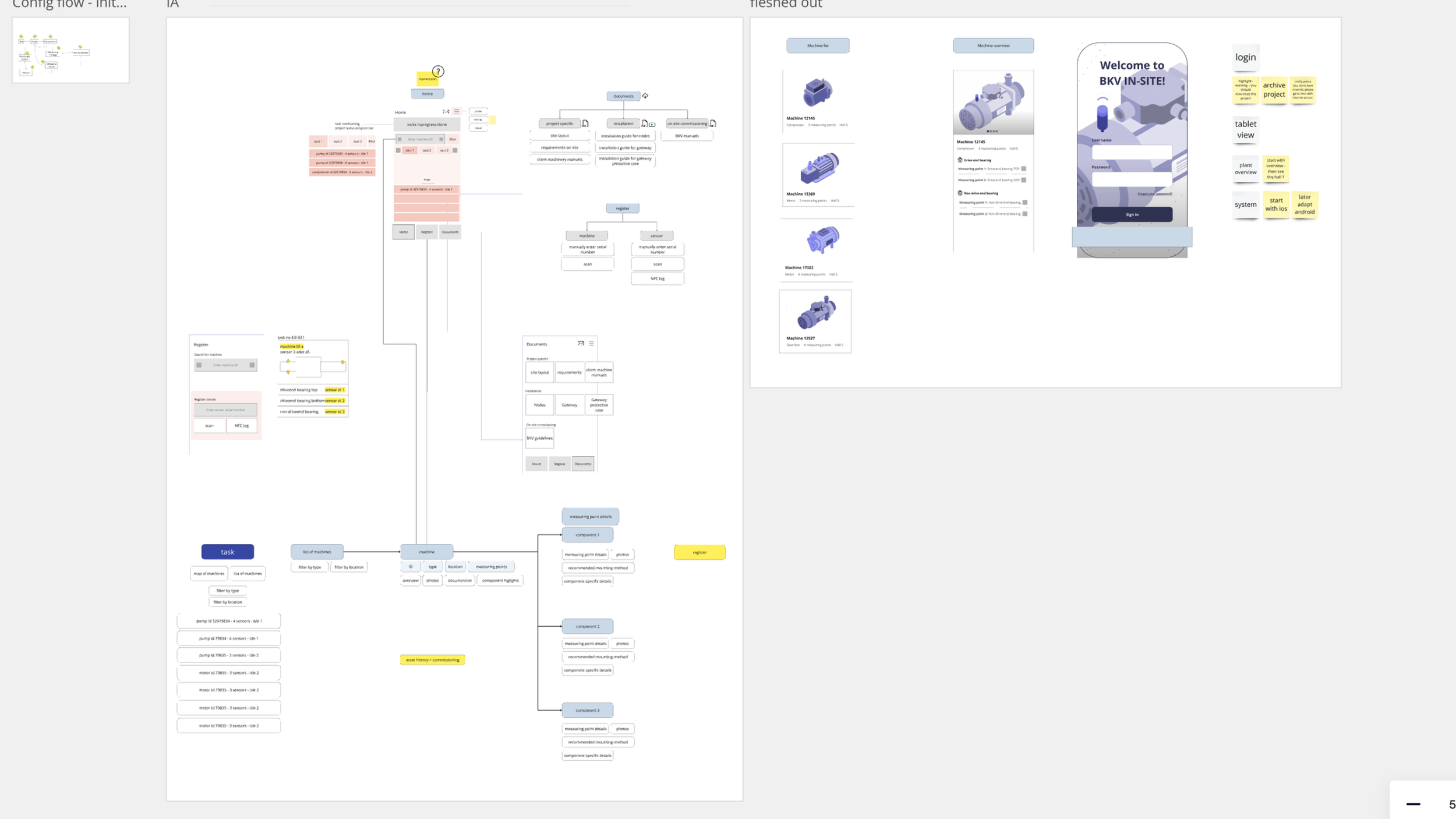
Early designs
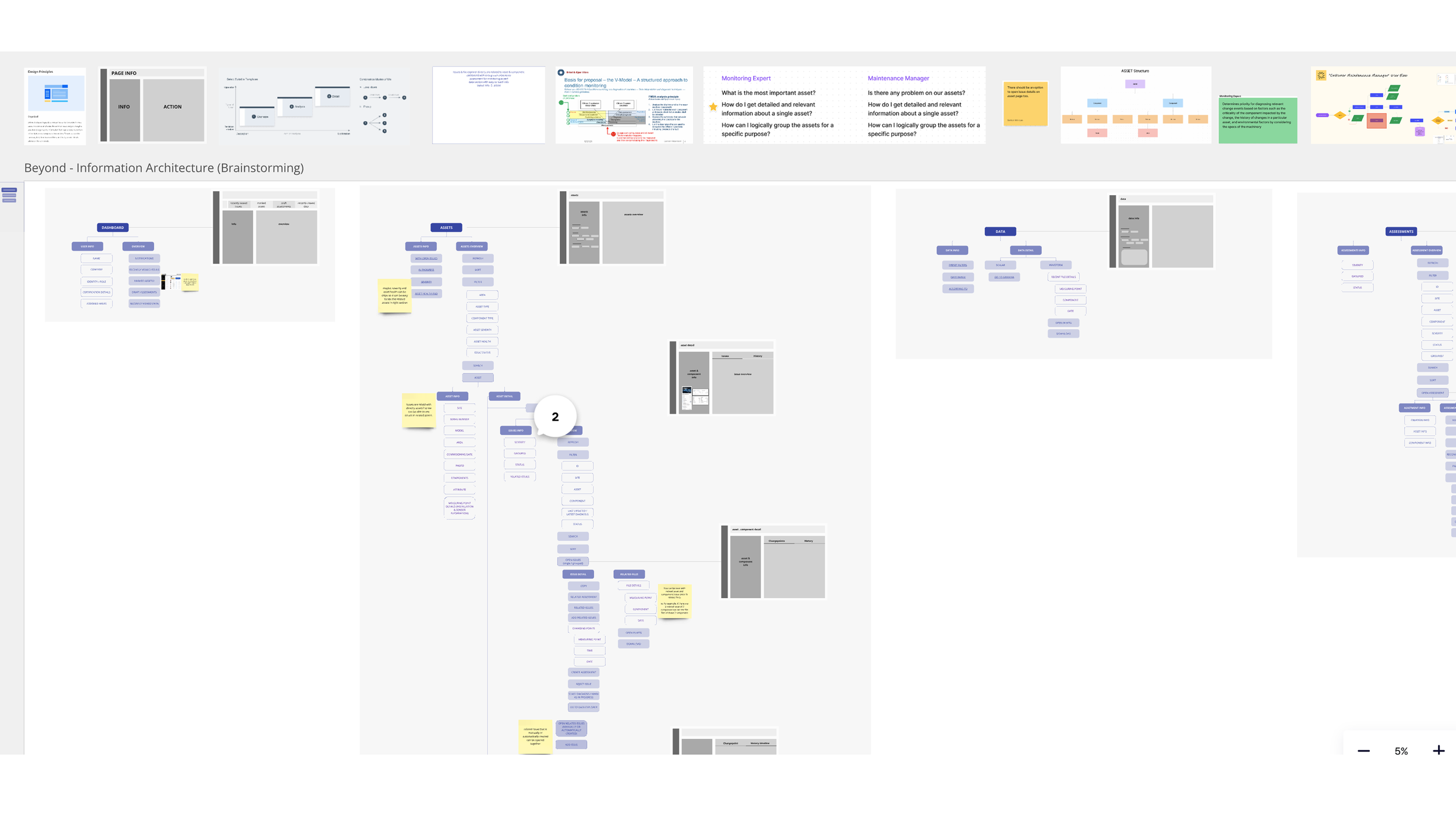
Information architecture
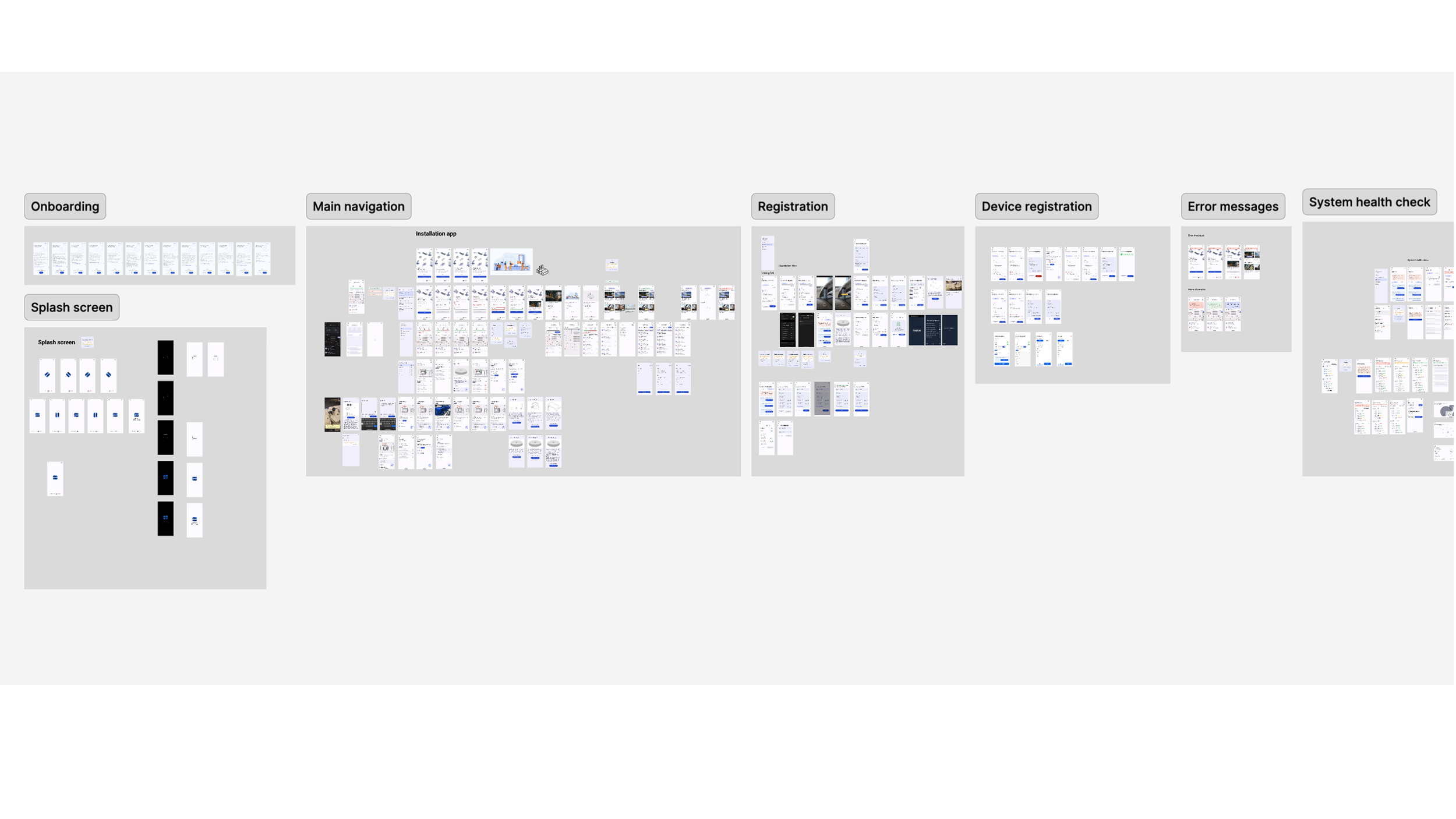
Product featuress
DESIGN & DELIVERY
Using flowcharts, and iterative wireframes, I worked through the full installation workflow and translated it into Deploy, a companion app that replaced printed manuals and paperwork with a guided, task-based digital experience. Technicians could now download assigned project materials, plan their daily tasks, access documentation on the spot, and register devices immediately upon completing installation.
The results were immediate: paperwork reduced by 90%, installation errors dropped significantly, and communication between field and office teams improved substantially. We handed off full hi-fi design files alongside a foundation for the broader suite.
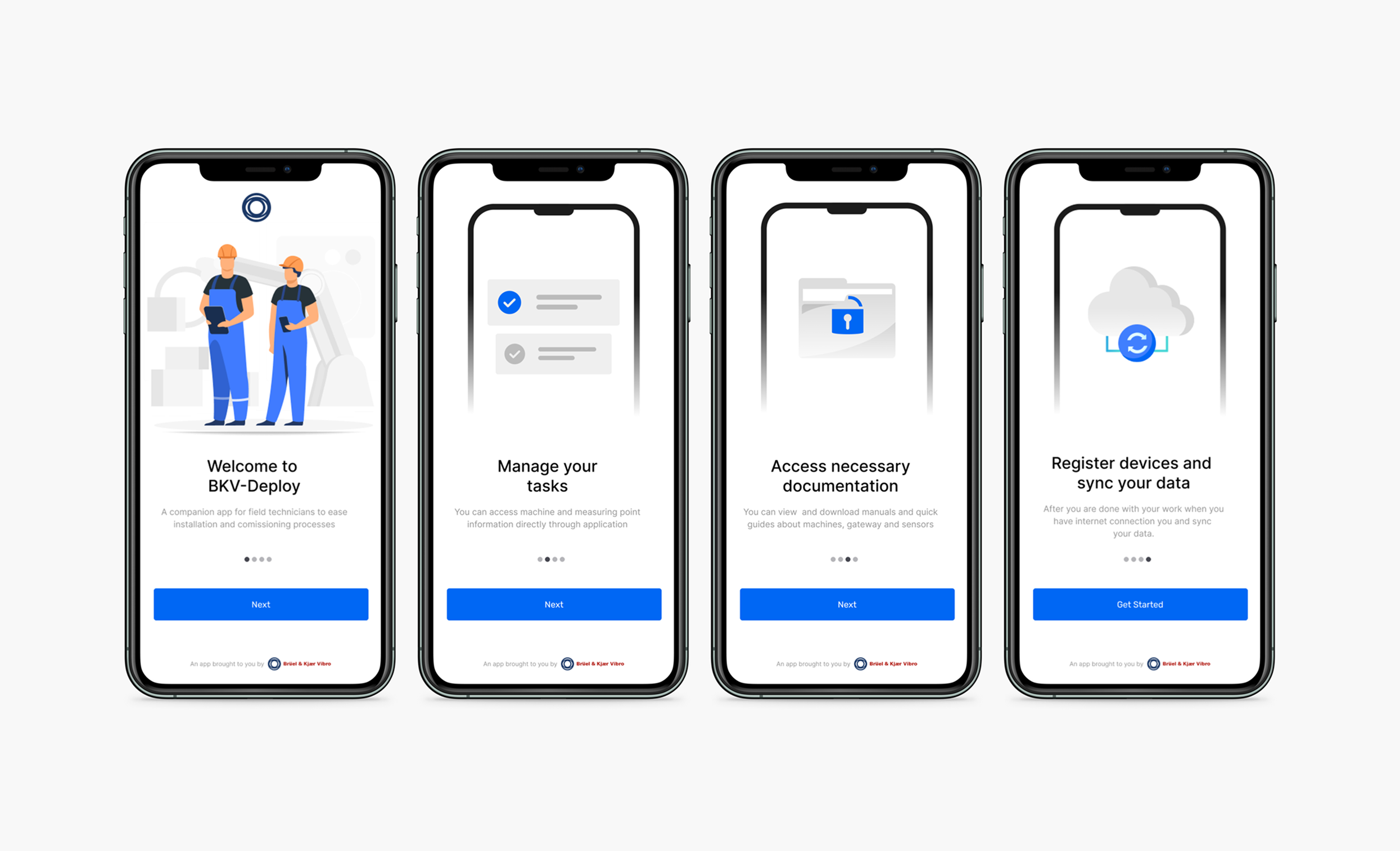
Onboarding
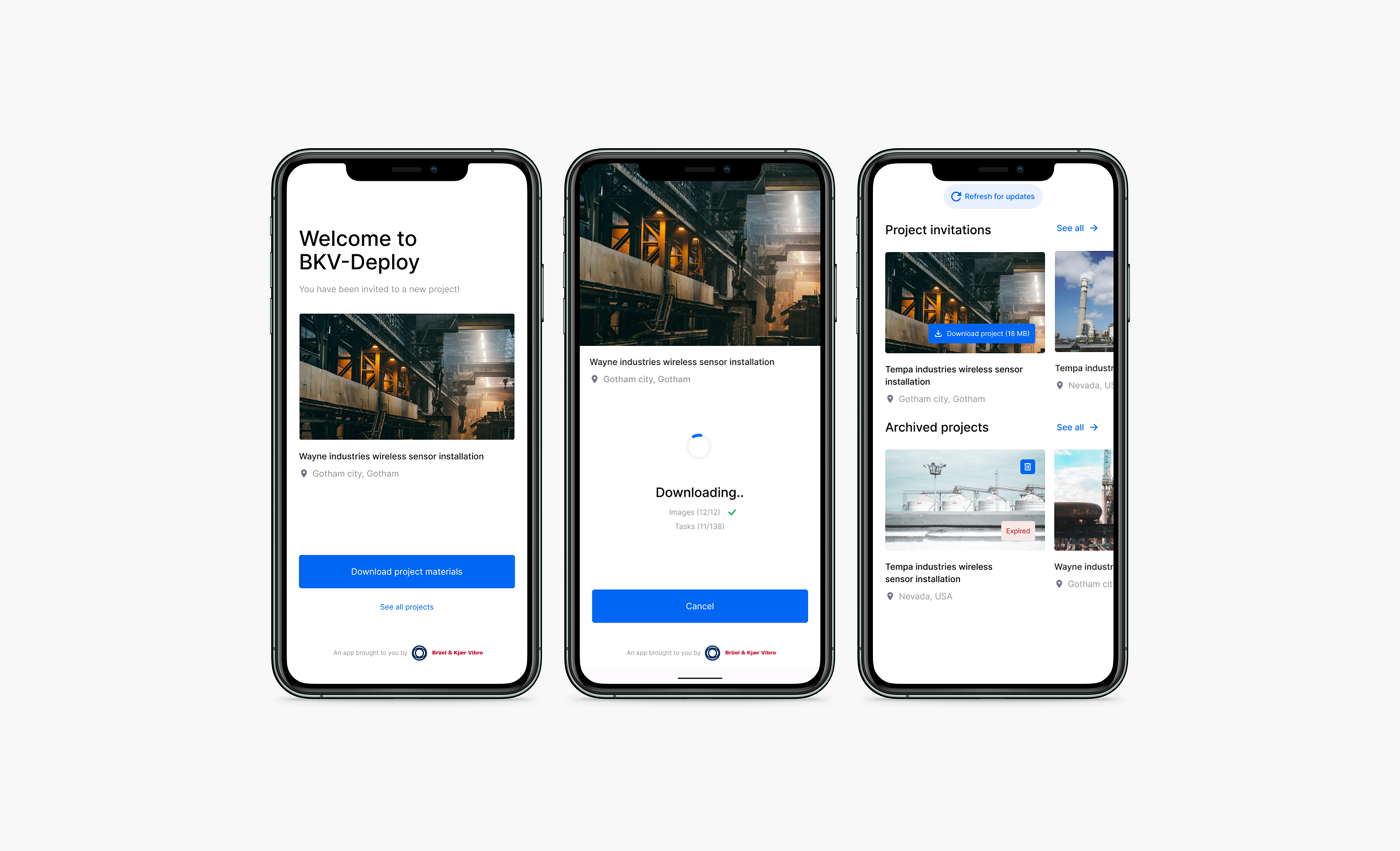
Project set up
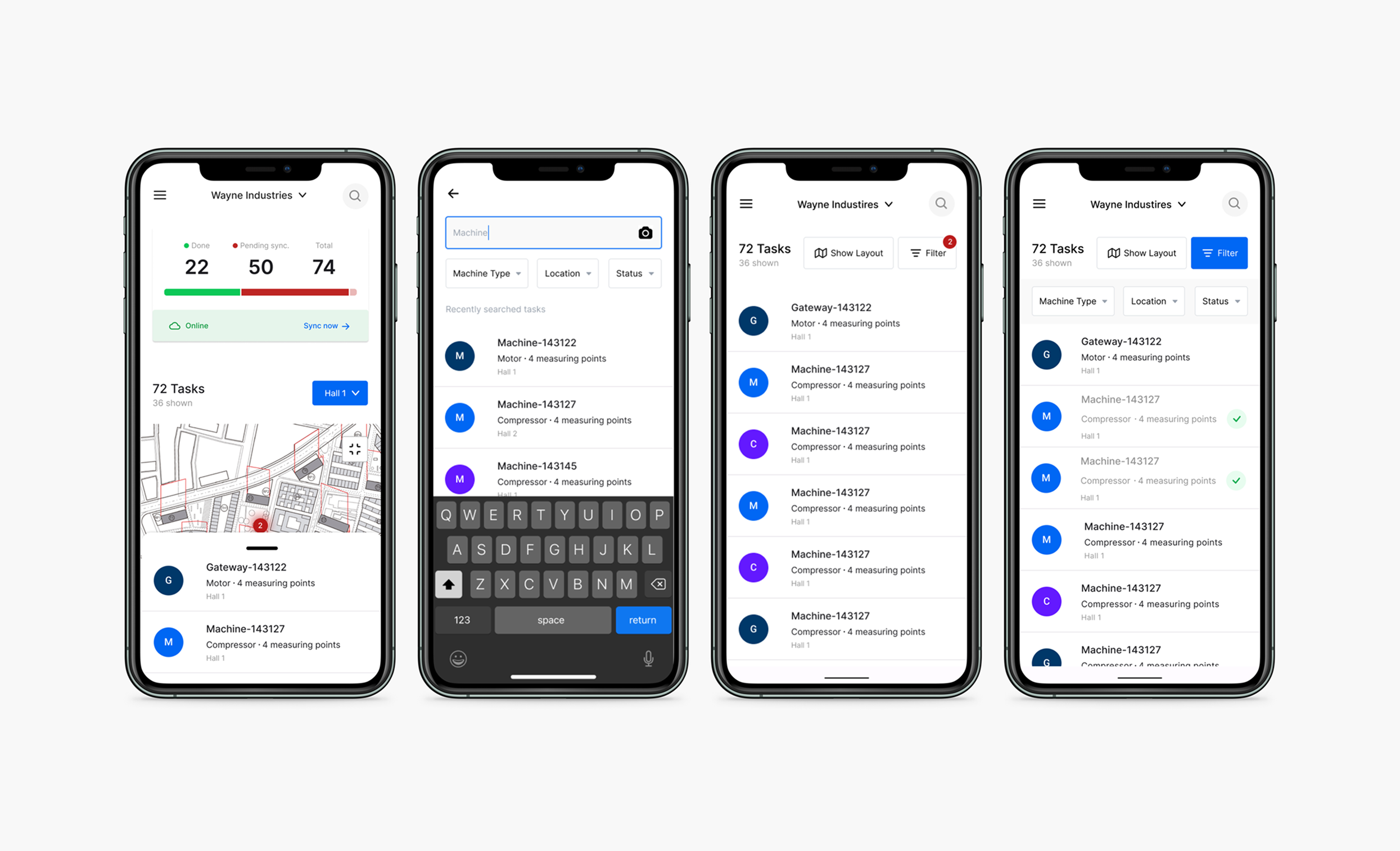
Task overview
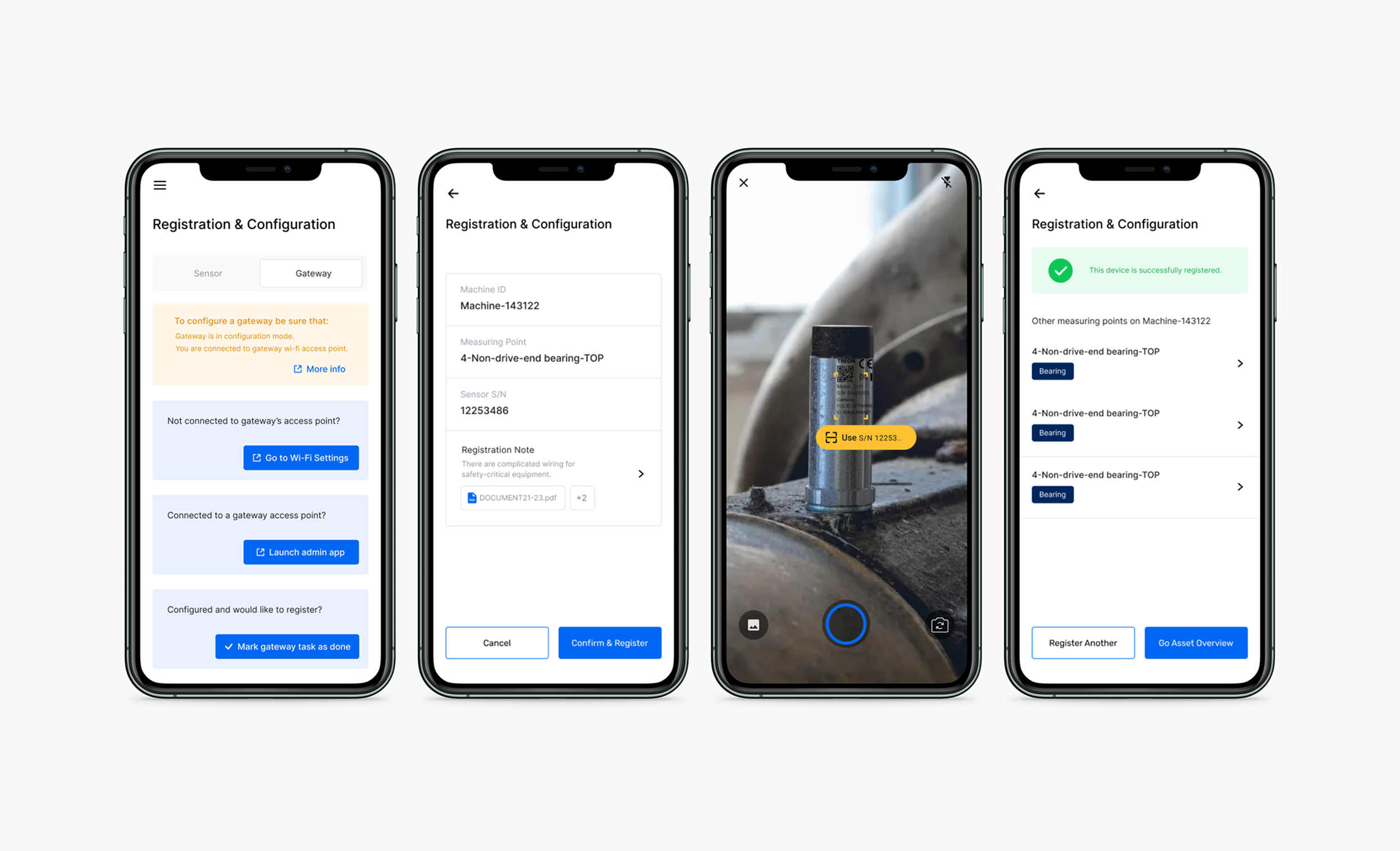
Registration & Configuration
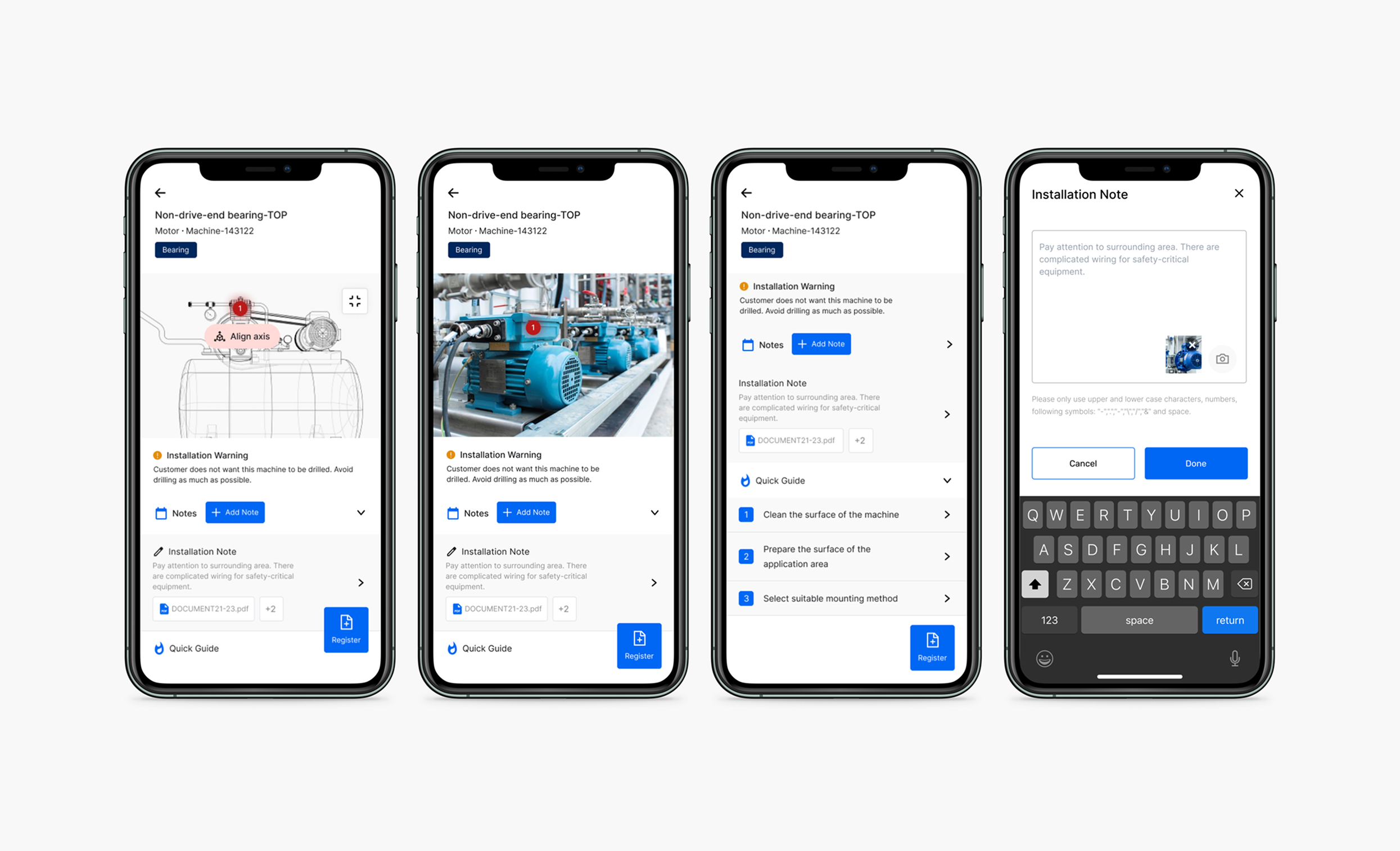
Machine details
REFLECTIONS
The scope expansion was the right call, but it added complexity fast. If I did this again, I would push for a more structured handoff between the three products earlier. Defining how these three solutions connect at the data level from the start would have saved significant rework later.